
Same-Day Emergency Response
Basement Flood Cleanup
Pump-out and structural drying for flooded basements, plus help finding how the water got in.
Serving Passaic, Bergen, Essex, Morris, Sussex & Hudson counties in Northern New Jersey.
At a glance
Heavy rain puts water in basements through foundation cracks and failed sump pumps, and the Passaic River basin has a long flood history. Call (551) 414-6202. We dispatch the same day and start pumping on arrival, then remove what cannot be dried and run dehumidifiers until the slab and framing read dry.
Content reviewed August 2026.
Call between 8am and 6pm, Sunday through Friday, and a person picks up. Closed Saturdays for Shabbat.

Same-day emergency response
Response promise
6 counties
Northern NJ service area
Totowa, NJ
Locally owned & operated
IICRC Certified
Certification
The work
What's included
Basement flood cleanup across Northern NJ. We pump out the standing water and remove what soaked through, then dry the concrete and framing to a metered standard. Same-day response from our Totowa crew.
- Same-day emergency response, six days a week
- Pumps and wet vacuums clear standing water down to the slab
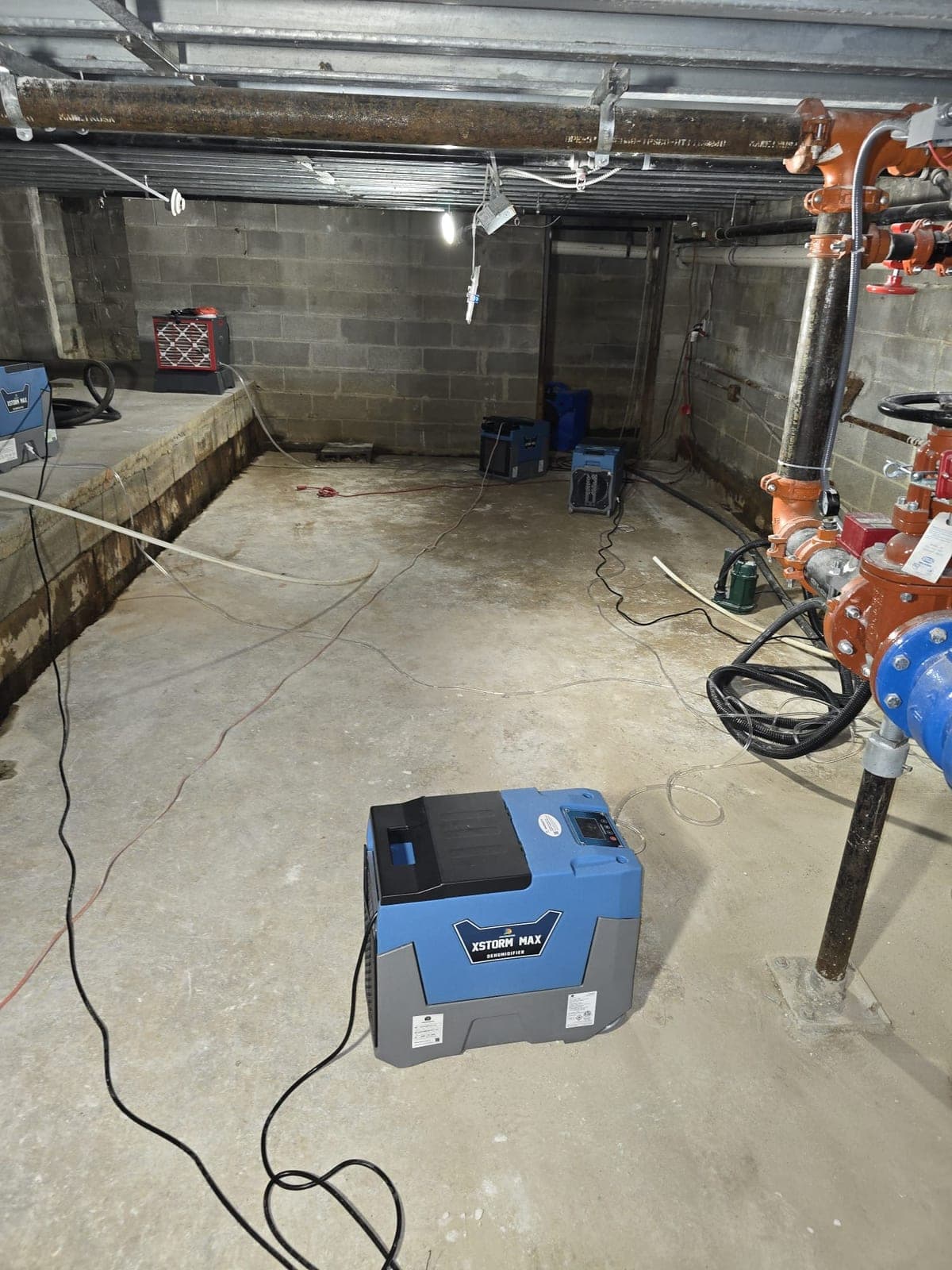
- Concrete floors and walls dried with high-capacity dehumidifiers
- Soaked carpet, pad, drywall, and stored belongings removed for disposal
- Affected surfaces treated with EPA-registered antimicrobials
- Moisture readings on the slab and framing before the job is called done
- Covered claims documented and billed directly to your carrier; no claim is required to hire us
Process
What happens after you call.
- 01
Find how the water got in

A failed sump, foundation seepage, a burst pipe, and a backed-up drain each get handled differently, and a drain backup changes the safety rules because the water is contaminated. The free inspection sorts this out before anything else.
- 02
Pump out the standing water

Pumps bring the depth down and wet vacuums finish at the slab. If water is still entering, we address the source first so the basement stays empty once it is pumped.
- 03
Remove soaked materials

Wet carpet and pad, swollen baseboards, damp drywall, and cardboard on the floor all hold moisture against the structure. Whatever cannot be dried is removed and photographed, with a written list for your records.
- 04
Dry the concrete and framing

Concrete absorbs water and releases it slowly, so a basement can feel dry while the slab still reads wet. High-capacity dehumidifiers and air movers run until meter readings on the slab and framing reach the dry standard.
- 05
Treat and verify

Surfaces are cleaned and treated with EPA-registered antimicrobials, and final moisture readings are taken before the equipment comes out. Mold can start in a damp basement within 24 to 48 hours of flooding, which is why we verify the drying with meters.
Insurance
We work with your insurance, and we bill them directly
- 01
Call us
We answer, ask what happened, and get a crew moving. Same-day emergency response on active water.
- 02
We document everything
We take moisture readings and photos and write up a scope of work before drying starts, so your adjuster has the file from day one.
- 03
We bill your insurer directly
We work directly with your insurance company on covered water and mold claims, so you're not fronting the full cost and chasing reimbursement.
Your deductible is still yours to cover, and we'll tell you that number before any work starts rather than after. You also don't need a claim to hire us. Plenty of our jobs are paid directly by the homeowner, and after the free inspection we'll say which way makes more sense for the damage you have.
Common problems
What we get called about most.
Sump pump failed during a storm
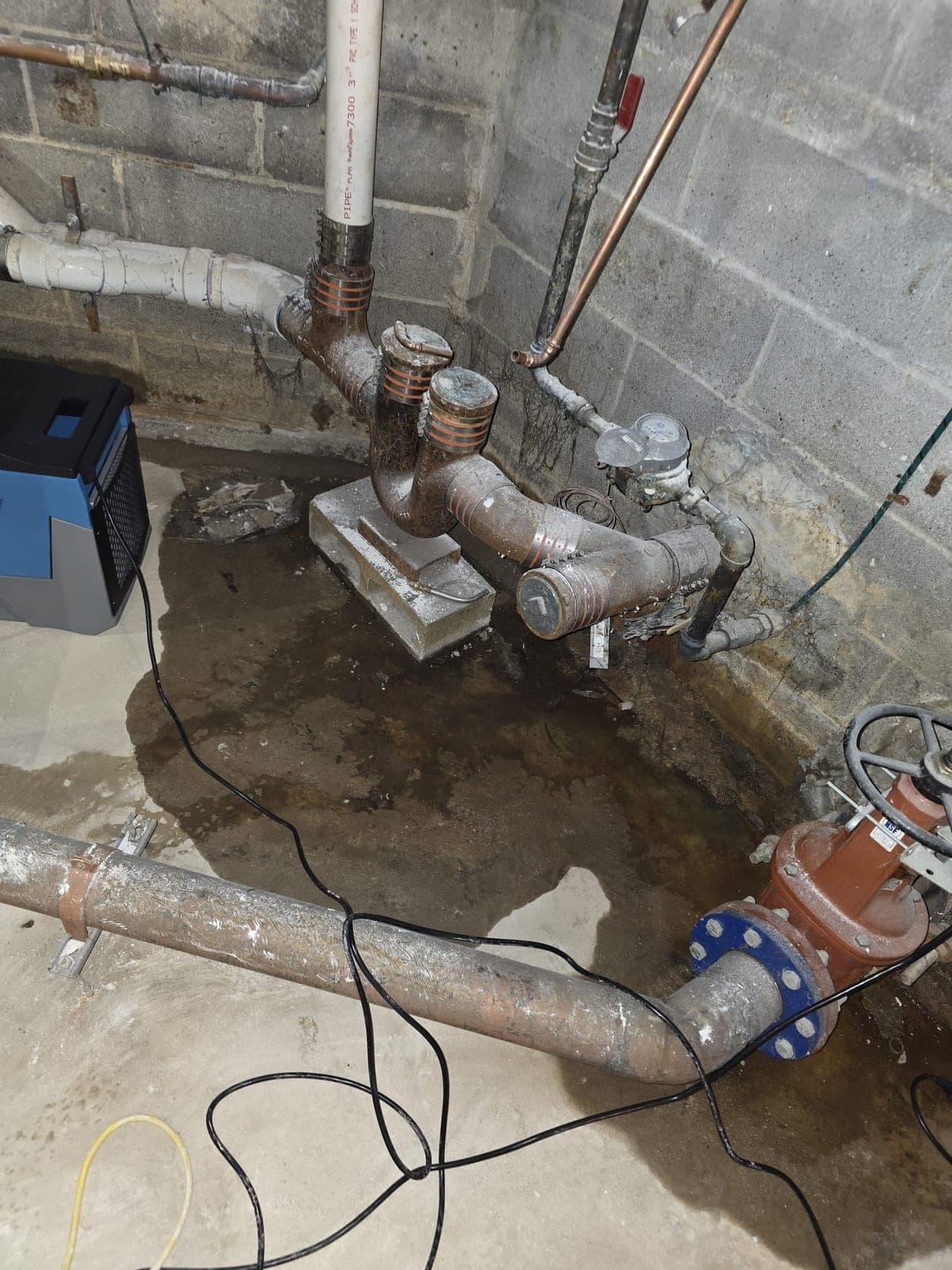
A failed or overwhelmed sump lets groundwater rise through the pit. We pump the basement out and dry it, and we document the cause, which helps when you talk to your carrier about coverage.
Seepage through the foundation
Days of rain saturate the soil and force water through cracks and the joint where the wall meets the slab. We extract and dry the basement and show you where the water entered so you can plan the repair.
Wet drywall in a finished basement
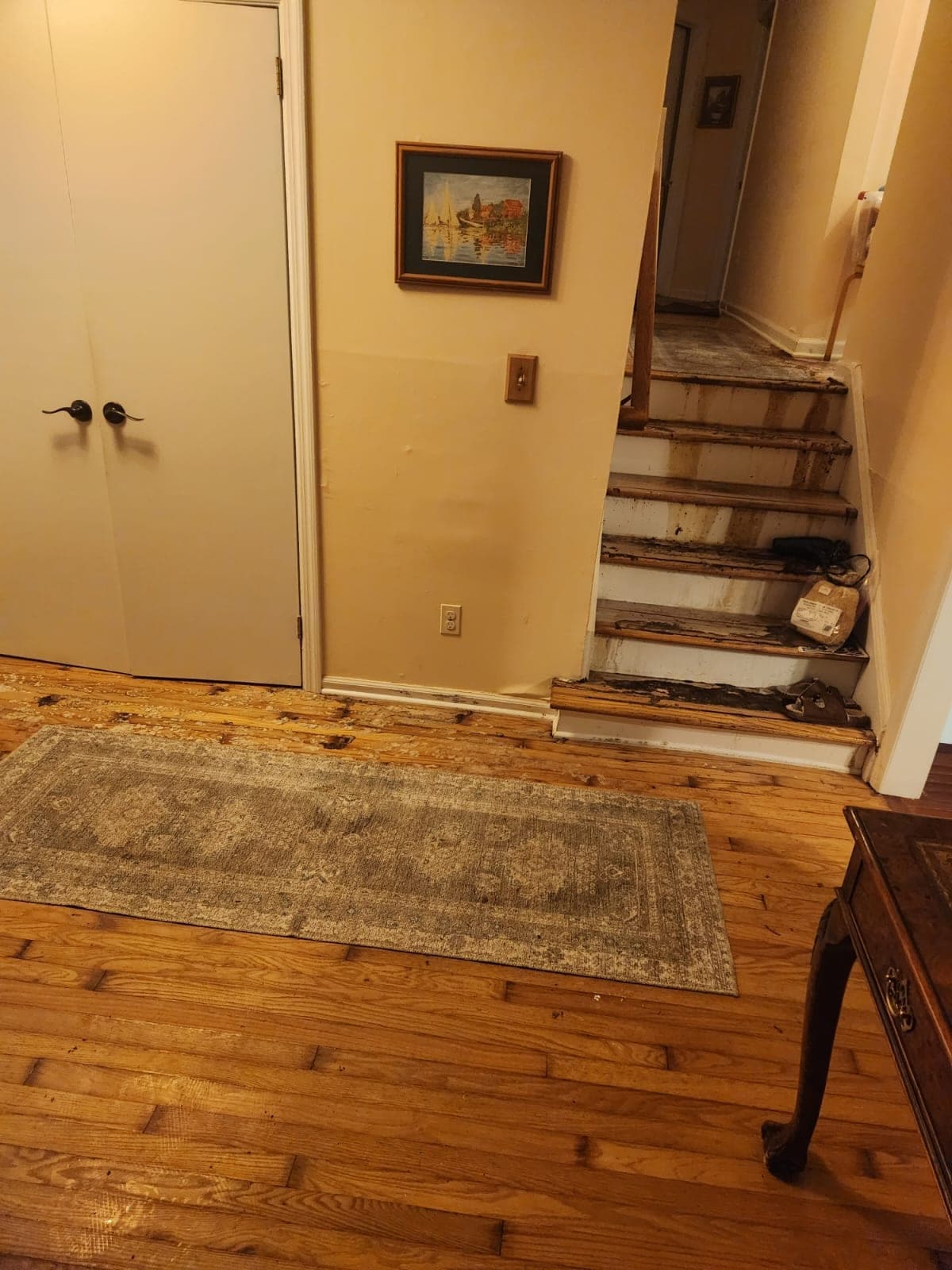
Drywall draws water upward from the floor, so a shallow flood can wet the bottom of every wall in the room. We meter the walls and remove the sections that read wet, then dry the framing behind them before any rebuild.
Water reached the furnace or water heater
Equipment that stood in water needs a professional check before it runs again. Keep those circuits off and tell us what got wet when you call. We work around the units and flag anything that needs a licensed trade.
Who's showing up
Local and independent, based in Totowa, NJ.
The person on the phone is the one planning your job, and the scope and moisture readings come from the crew that does the work.
- IICRC Certified
- Licensed
- Bonded
- Insured
Related services
More of our water damage services.
Part of our Water Damage Restoration service — see the full picture →
Emergency Water Removal →
Standing water pumped out on the first visit, dispatched the same day you call.
Burst Pipe Cleanup →
Shut the main valve, then call us for the extraction and drying.
Sewage Backup Cleanup →
Category 3 cleanup with containment and EPA-registered disinfectants.
Storm Damage Cleanup →
Tarping and board-up first, then extraction and structural drying.
Structural Drying →
Drying measured with meters and logged daily until the structure reads dry.
FAQ
Questions we get most.
Does homeowners insurance cover water damage?
Usually, when the cause was sudden and accidental: a burst pipe, a failed water heater, an appliance hose that let go. Policies generally exclude damage that happened gradually, like a slow leak that ran for months, and outside flooding needs a separate flood policy. When we inspect, we document the cause of loss carefully, because that is the first thing the adjuster reviews.
What should I do in the first few hours after water damage?
Stop the water at the main shut-off or the fixture valve if you can reach it safely. If water is near outlets or appliances, cut power to that area at the breaker — never stand in water to do it. Move what you can to a dry room. Then call (551) 414-6202. The sooner extraction starts, the more of the structure and contents we can save.
How long does structural drying take?
Most drying runs a few days, but the honest answer is: until the meters say dry. Dense materials like subfloor and framing give up moisture slowly. We set dehumidifiers and air movers, take readings as the job runs, and pull the equipment when wet materials match the dry ones nearby — not on a fixed schedule.
Will I get mold after water damage?
Not if the structure is dried correctly and quickly. Mold needs moisture, and it can begin growing on wet material in as little as 24 to 48 hours — that is why extraction and drying start the same day. Surfaces the water reached are cleaned and treated with EPA-registered antimicrobials before anything gets closed back up.
Can wet carpet and flooring be saved?
It depends on the water and the time. Carpet soaked by clean water for a short period can often be dried in place; the pad underneath usually cannot. Hardwood that has started cupping can sometimes be saved with controlled drying. Anything soaked by sewage comes out. We meter the flooring and tell you which of those cases you have before removing anything.
Our work





Emergency? Call first
If water is on the floor, skip the form.
Call (551) 414-6202. We'll ask what happened, tell you what to do right now, and get a crew moving. The line is answered six days a week. Use the form for anything that can wait.
Same-Day Emergency Response. Closed Saturdays for Shabbat.