
Free inspection · Insurance billed directly
Structural Drying Services
Drying measured with meters and logged daily until the structure reads dry.
Serving Passaic, Bergen, Essex, Morris, Sussex & Hudson counties in Northern New Jersey.
At a glance
A floor or wall that feels dry can still hold moisture in the layers underneath, and closing walls over damp framing is how mold problems appear later. We meter the structure and log readings each day the equipment runs, until the numbers reach the dry standard. Call (551) 414-6202 to schedule an inspection; it is free.
Content reviewed August 2026.
The inspection is free, and you get a written scope before any work starts. If the job is smaller than you expected, we'll tell you that.

The work
What's included
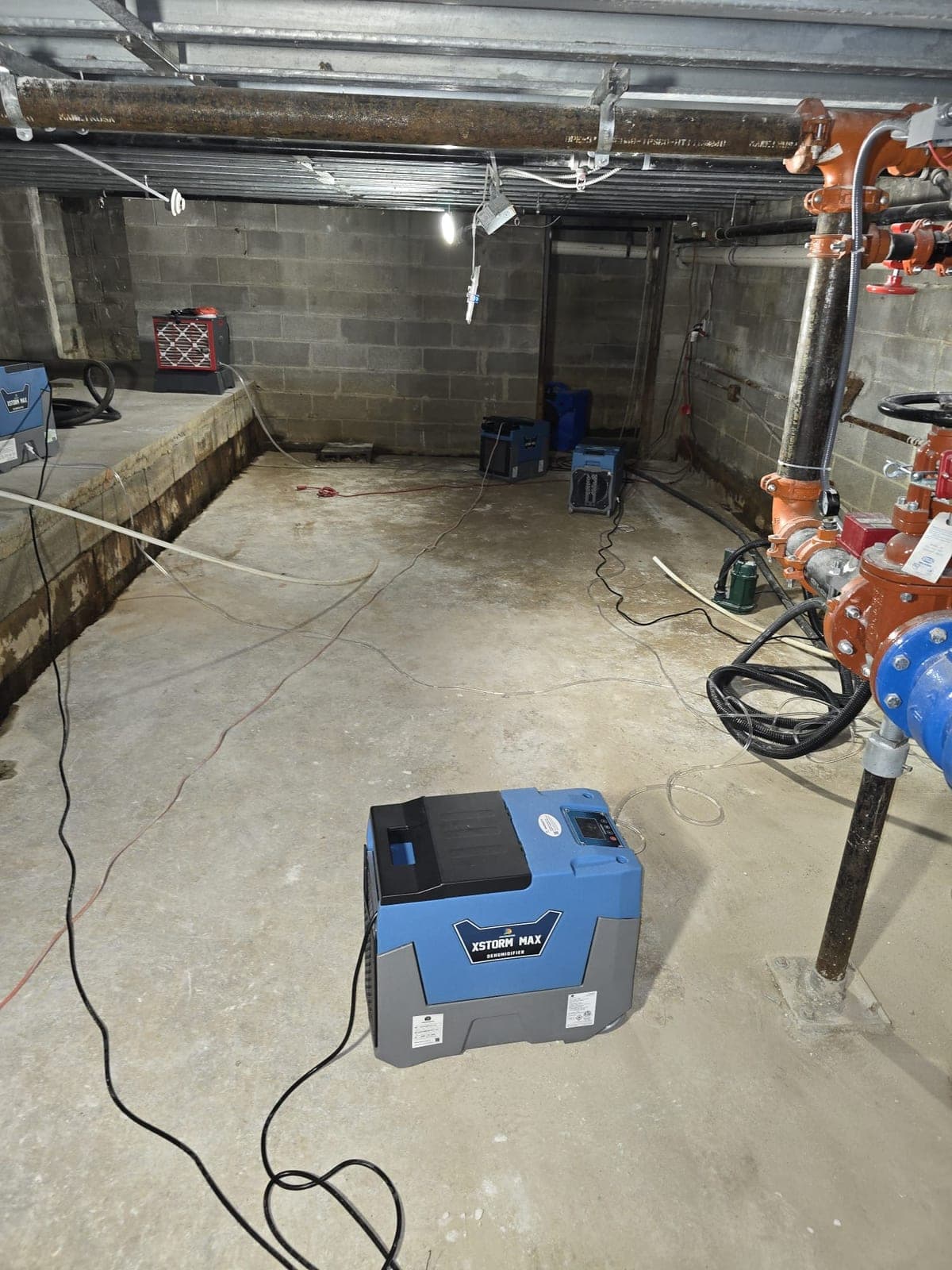
Structural drying to the IICRC S500 standard for Northern NJ homes and businesses. High-capacity dehumidifiers and air movers dry the building while daily moisture readings track progress, and the rebuild starts only after the structure meets a documented dry standard.
- Moisture meters and a thermal camera locate wet material before equipment is placed
- High-capacity dehumidifiers and air movers, applied per the IICRC S500 standard
- Readings taken and logged daily, with equipment repositioned as areas dry
- Drying goals set against a measured dry standard, not appearance
- Wood framing, subfloors, concrete, and plaster metered separately, because each dries at a different rate
- The full drying log is yours at the end of the job
- We work directly with your carrier on covered claims, and many drying jobs are homeowner-paid with no claim at all
Process
How the job goes.
- 01
Meter and map

Every affected room gets baseline readings: wall cavities, subfloor, framing, and any concrete. A thermal camera helps find damp areas a surface check would miss, and readings from unaffected materials set the dry standard we dry toward.
- 02
Place the equipment

High-capacity dehumidifiers pull moisture out of the air while air movers push airflow across wet surfaces. How many units go in, and where they sit, comes from the baseline readings.
- 03
Read and log daily

We return for readings each day the equipment runs. Every reading goes into the drying log with its location and date, and equipment moves as materials reach their targets.
- 04
Confirm the dry standard

Drying is finished when the readings match the dry standard, not when surfaces feel dry to the hand. Concrete usually takes longest; wood framing and drywall come in sooner.
- 05
Hand over the record

The equipment comes out and you get the complete log: baseline numbers, daily readings, final readings, and photos. If repairs follow, the record shows the rebuild started over a dry structure.
Insurance
We work with your insurance, and we bill them directly
- 01
Call us
We answer, ask what happened, and get a crew moving. Same-day emergency response on active water.
- 02
We document everything
We take moisture readings and photos and write up a scope of work before drying starts, so your adjuster has the file from day one.
- 03
We bill your insurer directly
We work directly with your insurance company on covered water and mold claims, so you're not fronting the full cost and chasing reimbursement.
Your deductible is still yours to cover, and we'll tell you that number before any work starts rather than after. You also don't need a claim to hire us. Plenty of our jobs are paid directly by the homeowner, and after the free inspection we'll say which way makes more sense for the damage you have.
Common problems
What we get called about most.
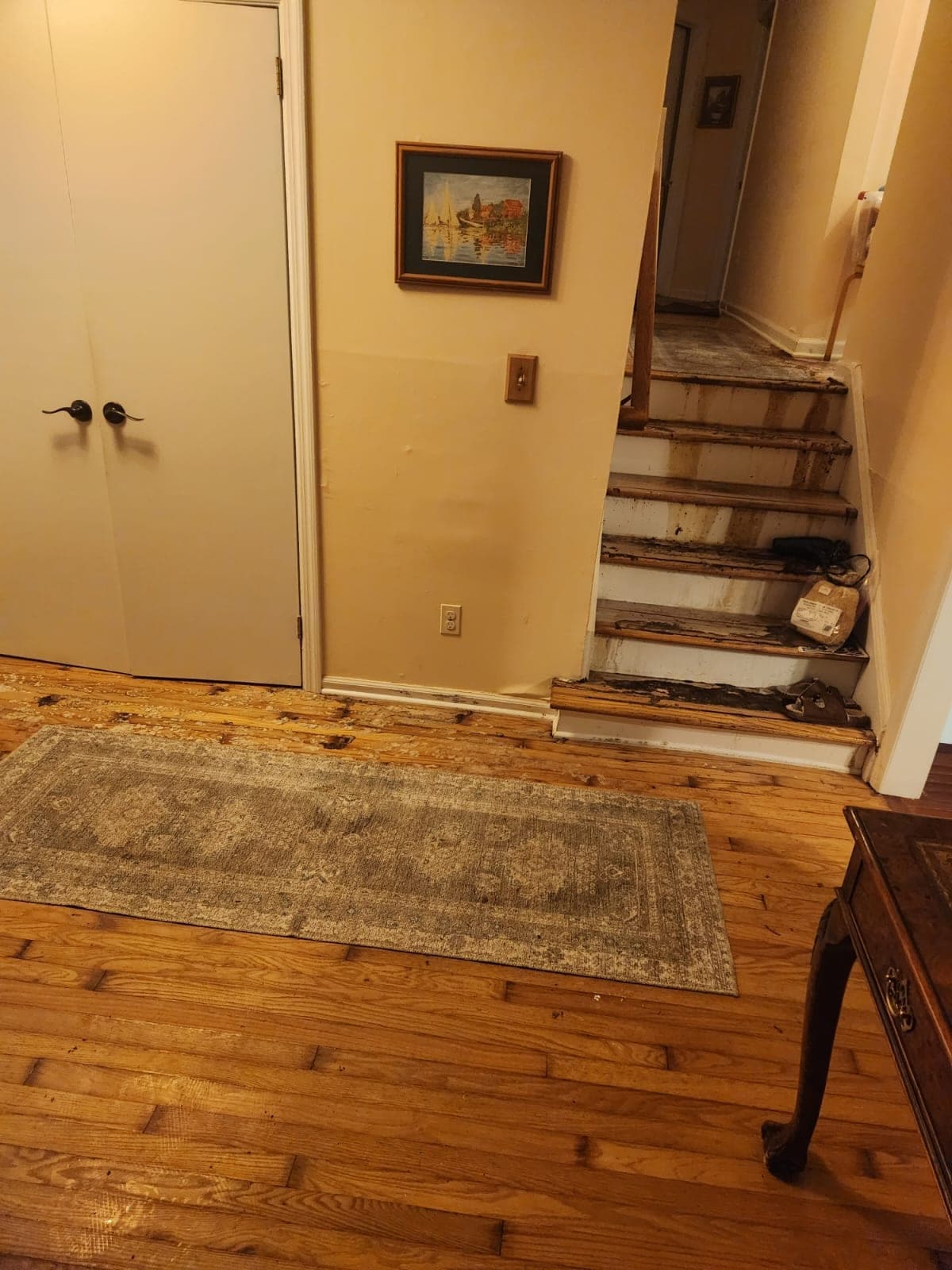
Hardwood floor cupping after a leak
Cupped boards are wetter on the bottom than the top. Metered drying can sometimes flatten them if it starts before the wood deforms permanently, and the subfloor readings tell us whether drying in place is still realistic.
Drywall still damp behind the baseboards
The bottom edge of drywall takes up water from the floor and dries slowly behind trim. We pull the baseboards and meter the lower wall, opening it only where the readings stay high.
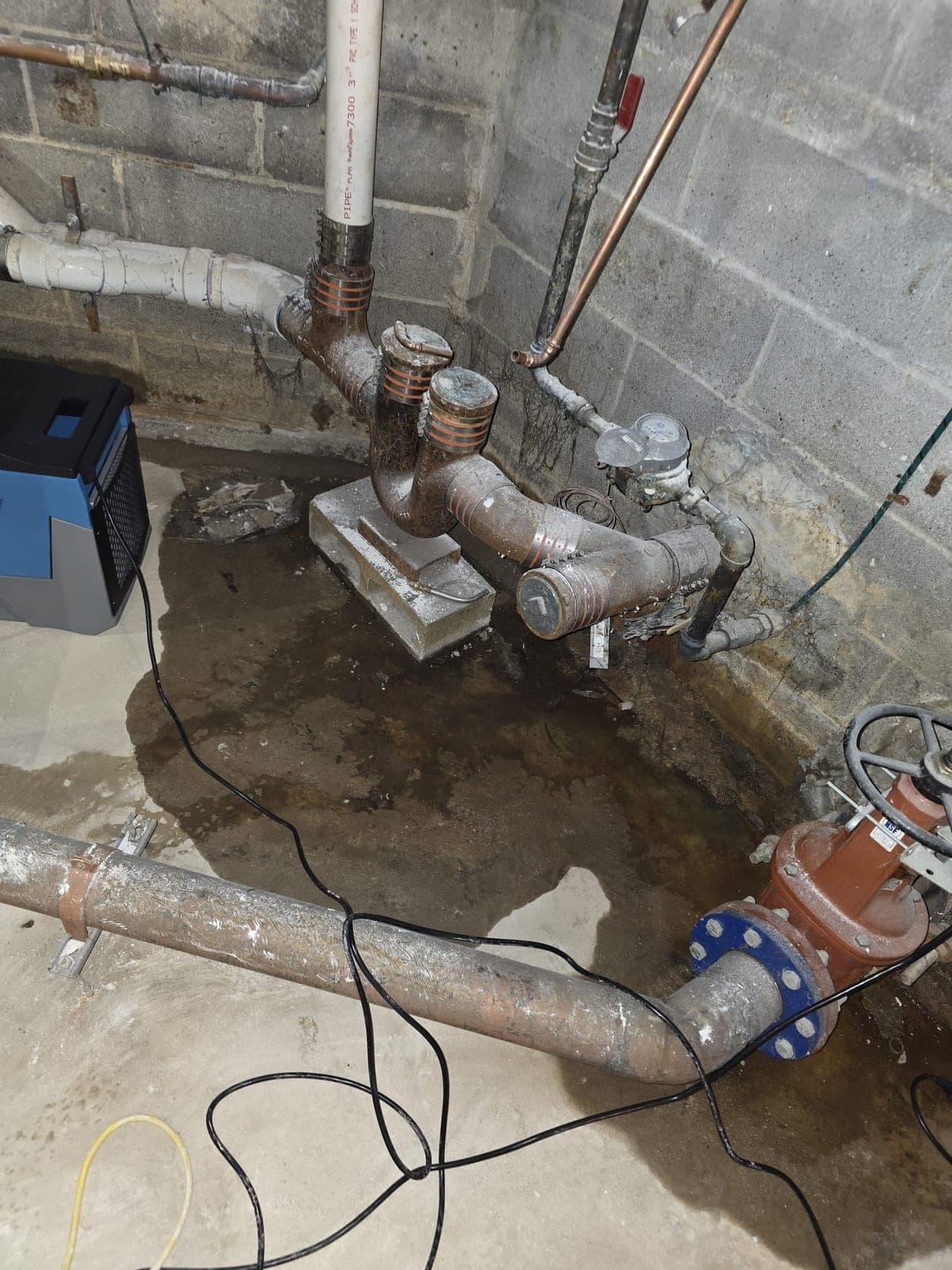
Concrete slab reads wet weeks later
Concrete holds water long after the surface looks normal, and flooring installed over a damp slab can fail or grow mold underneath. Dehumidification keeps running until the slab readings reach the standard.
Adjuster asking for drying documentation
Carriers ask for drying records on water losses. Our log shows the dates, locations, readings, and equipment for the whole dry-out, in a format an adjuster can work from.
Who's showing up
Local and independent, based in Totowa, NJ.
The person on the phone is the one planning your job, and the scope and moisture readings come from the crew that does the work.
- IICRC Certified
- Licensed
- Bonded
- Insured
Related services
More of our water damage services.
Part of our Water Damage Restoration service — see the full picture →
Emergency Water Removal →
Standing water pumped out on the first visit, dispatched the same day you call.
Basement Flood Cleanup →
Pump-out and structural drying for flooded basements, plus help finding how the water got in.
Burst Pipe Cleanup →
Shut the main valve, then call us for the extraction and drying.
Sewage Backup Cleanup →
Category 3 cleanup with containment and EPA-registered disinfectants.
Storm Damage Cleanup →
Tarping and board-up first, then extraction and structural drying.
FAQ
Questions we get most.
What documentation does an insurance claim need?
Photos of the damage before work starts, moisture readings from every affected material, drying logs while equipment runs, and an itemized scope of what was removed and why. We produce all of it as we work, and you get a copy whether or not you file. If a failed part caused the loss — a supply line, a fitting — keep it, because adjusters often want to see it.
The floor looks dry now. Is the damage done?
Surfaces dry first; the layers underneath do not. Water wicks into subfloors, wall cavities, and insulation, where it can sit for weeks. Mold growth can start in 24 to 48 hours in material that stays wet. We check with moisture meters and a thermal camera, and if the readings say the structure is dry, we tell you that and leave it alone.
How long does structural drying take?
Most drying runs a few days, but the honest answer is: until the meters say dry. Dense materials like subfloor and framing give up moisture slowly. We set dehumidifiers and air movers, take readings as the job runs, and pull the equipment when wet materials match the dry ones nearby — not on a fixed schedule.
Will I get mold after water damage?
Not if the structure is dried correctly and quickly. Mold needs moisture, and it can begin growing on wet material in as little as 24 to 48 hours — that is why extraction and drying start the same day. Surfaces the water reached are cleaned and treated with EPA-registered antimicrobials before anything gets closed back up.
Can wet carpet and flooring be saved?
It depends on the water and the time. Carpet soaked by clean water for a short period can often be dried in place; the pad underneath usually cannot. Hardwood that has started cupping can sometimes be saved with controlled drying. Anything soaked by sewage comes out. We meter the flooring and tell you which of those cases you have before removing anything.
Our work





Free inspection
Start with a free inspection and a written scope.
Call or send the form. We come out, look at what you have, and put the scope in writing so you know what the work involves. If it can wait, we'll say so.
Office hours: Mon–Fri 8am–6pm · Sun 8am–6pm · Closed Saturdays.