
Same-Day Emergency Response
Burst & Frozen Pipe Cleanup
Shut the main valve, then call us for the extraction and drying.
Serving Passaic, Bergen, Essex, Morris, Sussex & Hudson counties in Northern New Jersey.
At a glance
A burst pipe keeps releasing water until the main valve is closed, so shut it off first if you can reach it. Then call (551) 414-6202. We arrive the same day, and we trace how far the water spread with moisture meters and a thermal camera before drying starts.
Content reviewed August 2026.
Call between 8am and 6pm, Sunday through Friday, and a person picks up. Closed Saturdays for Shabbat.

Same-day emergency response
Response promise
6 counties
Northern NJ service area
Totowa, NJ
Locally owned & operated
IICRC Certified
Certification
The work
What's included
Cleanup after burst and frozen pipes for Northern NJ homes and businesses. We extract the water and dry the wall cavities it reached, with the damage documented from the first visit. Same-day response from Totowa.
- Same-day emergency response, six days a week
- Close the main valve first, and tell us what you see when you call
- Extraction and drying equipment on the same visit
- Moisture meters and a thermal camera trace water inside walls and ceilings
- Wet wall cavities opened and dried before repairs close them up
- Frozen-pipe failures are common in cold months; we photograph and document the break for your records
- We work directly with your carrier on covered burst-pipe claims, and you can hire us without filing one
Process
What happens after you call.
- 01
Stop the water
Close the main valve if you can reach it. The pipe repair itself is a plumber's job, and our extraction starts as soon as the line is off.
- 02
Map the spread
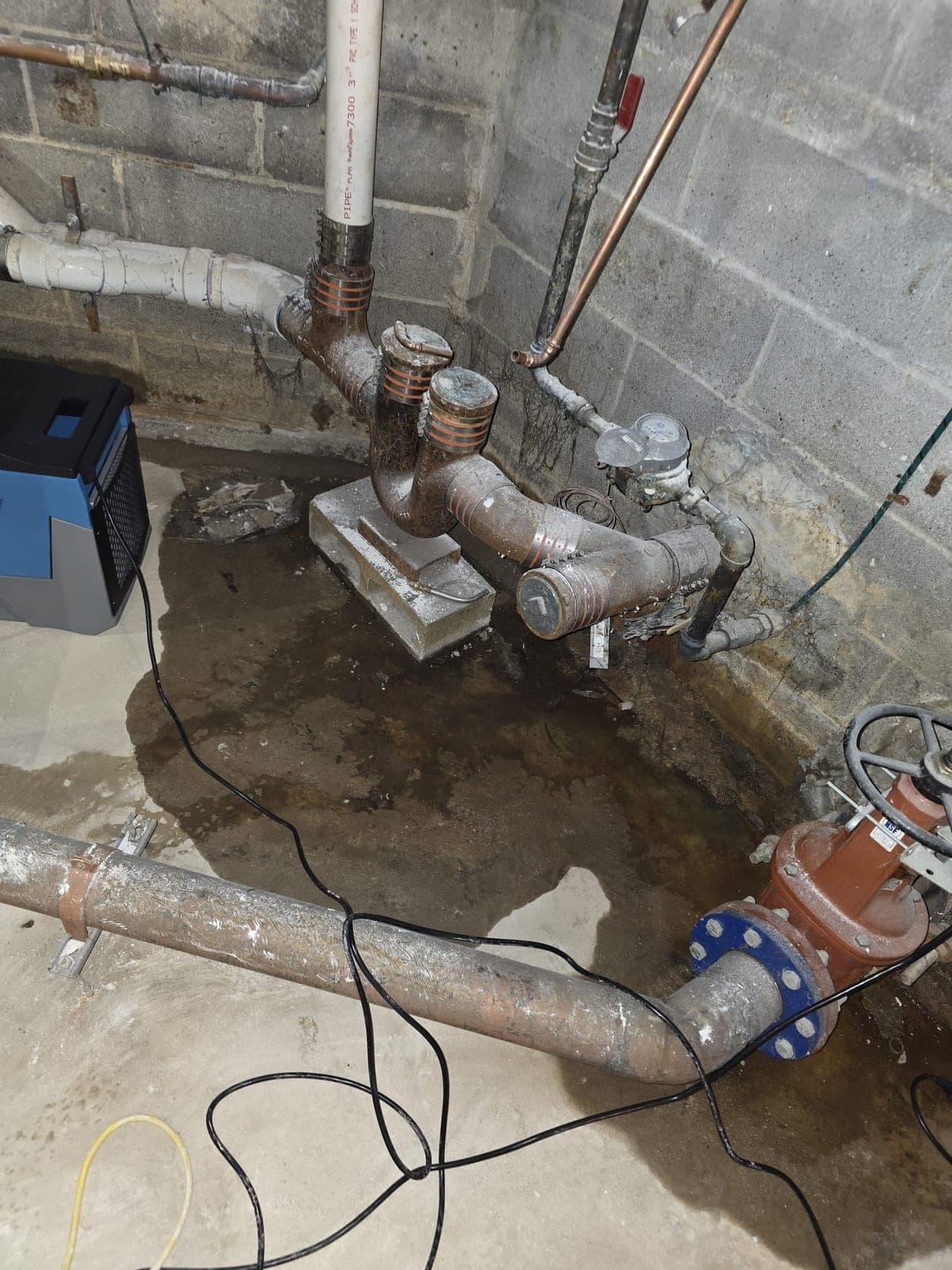
Water from an upstairs break can reach the basement. We meter every level below the break, including wall cavities and ceilings, before deciding what gets opened.
- 03
Extract and remove
Pumps and wet vacuums take out the standing water. Ceiling drywall that held water comes down in a controlled way, along with insulation that got soaked, inside a contained work area.
- 04
Open and dry the cavities
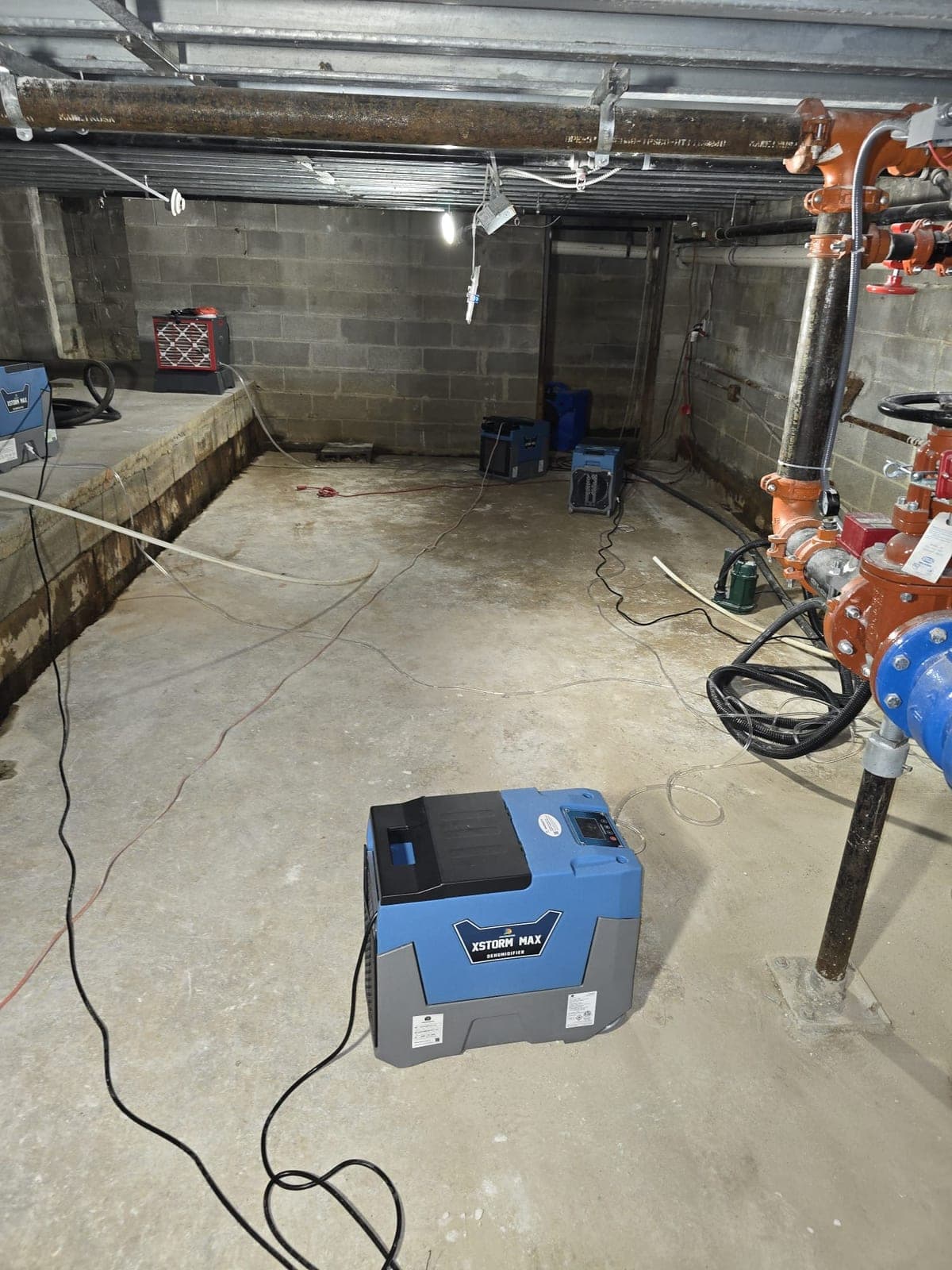
Baseboards come off and wet wall sections are opened so air can reach the framing. Air movers and dehumidifiers run until readings inside the cavities reach the dry standard.
- 05
Verify and document
Final moisture readings confirm the structure is dry. Photos, readings, equipment logs, and a list of removed materials go into one file; on a covered claim it goes to your adjuster, and either way you keep a copy.
Insurance
We work with your insurance, and we bill them directly
- 01
Call us
We answer, ask what happened, and get a crew moving. Same-day emergency response on active water.
- 02
We document everything
We take moisture readings and photos and write up a scope of work before drying starts, so your adjuster has the file from day one.
- 03
We bill your insurer directly
We work directly with your insurance company on covered water and mold claims, so you're not fronting the full cost and chasing reimbursement.
Your deductible is still yours to cover, and we'll tell you that number before any work starts rather than after. You also don't need a claim to hire us. Plenty of our jobs are paid directly by the homeowner, and after the free inspection we'll say which way makes more sense for the damage you have.
Common problems
What we get called about most.
Frozen pipe burst in an outside wall
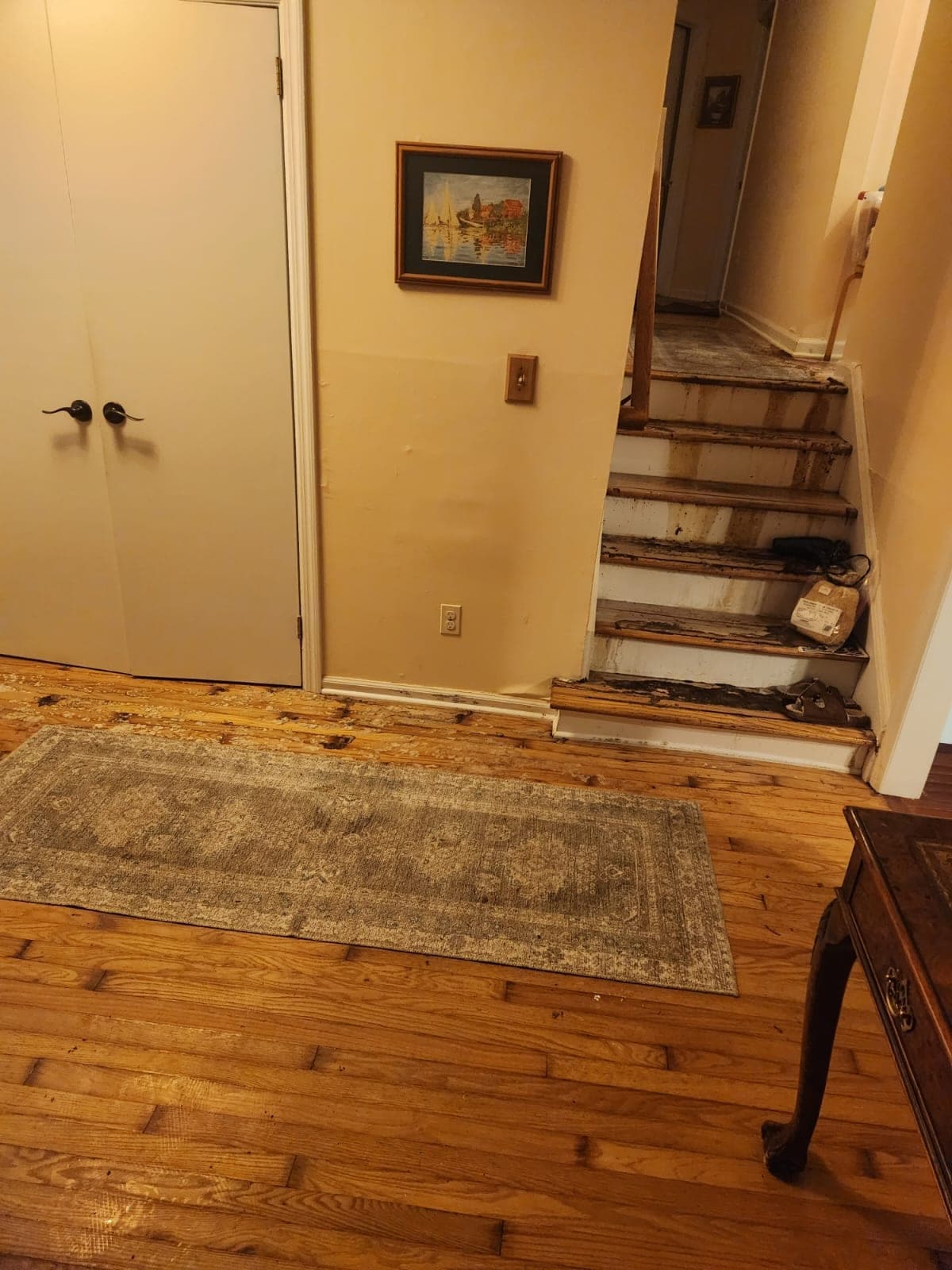
Pipes in exterior walls and unheated spaces freeze first during a cold snap, and the break often shows up at the thaw, when water starts flowing again. We open the wall and dry the cavity, and the split pipe is photographed for your records.
Upstairs break, water on every level
Water from a second-floor supply line runs down through the floor framing into the rooms below, sometimes all the way to the basement. We meter each level so nothing inside the structure stays wet.
Pinhole leak that ran for weeks
A small spray inside a wall can soak framing and insulation long before a stain shows. By the time you see it, the cavity usually needs to be opened and dried, then treated with an EPA-registered antimicrobial.
Supply hose failed on an appliance
Washing machine and dishwasher hoses fail with the valve open, so water keeps flowing until someone closes it. We extract and dry the room, then meter the rooms around it, because this water spreads farther than it looks.
Who's showing up
Local and independent, based in Totowa, NJ.
The person on the phone is the one planning your job, and the scope and moisture readings come from the crew that does the work.
- IICRC Certified
- Licensed
- Bonded
- Insured
Related services
More of our water damage services.
Part of our Water Damage Restoration service — see the full picture →
Emergency Water Removal →
Standing water pumped out on the first visit, dispatched the same day you call.
Basement Flood Cleanup →
Pump-out and structural drying for flooded basements, plus help finding how the water got in.
Sewage Backup Cleanup →
Category 3 cleanup with containment and EPA-registered disinfectants.
Storm Damage Cleanup →
Tarping and board-up first, then extraction and structural drying.
Structural Drying →
Drying measured with meters and logged daily until the structure reads dry.
FAQ
Questions we get most.
Does homeowners insurance cover water damage?
Usually, when the cause was sudden and accidental: a burst pipe, a failed water heater, an appliance hose that let go. Policies generally exclude damage that happened gradually, like a slow leak that ran for months, and outside flooding needs a separate flood policy. When we inspect, we document the cause of loss carefully, because that is the first thing the adjuster reviews.
What documentation does an insurance claim need?
Photos of the damage before work starts, moisture readings from every affected material, drying logs while equipment runs, and an itemized scope of what was removed and why. We produce all of it as we work, and you get a copy whether or not you file. If a failed part caused the loss — a supply line, a fitting — keep it, because adjusters often want to see it.
What should I do in the first few hours after water damage?
Stop the water at the main shut-off or the fixture valve if you can reach it safely. If water is near outlets or appliances, cut power to that area at the breaker — never stand in water to do it. Move what you can to a dry room. Then call (551) 414-6202. The sooner extraction starts, the more of the structure and contents we can save.
Where do I shut off the water?
The main shut-off is usually where the water line enters the house: in the basement near the front wall, in a utility room, or near the water meter. Turn it clockwise to close. For a single fixture, the small valve under the sink or behind the toilet stops that line. If you cannot find the valve, call us and we will talk you through it.
The floor looks dry now. Is the damage done?
Surfaces dry first; the layers underneath do not. Water wicks into subfloors, wall cavities, and insulation, where it can sit for weeks. Mold growth can start in 24 to 48 hours in material that stays wet. We check with moisture meters and a thermal camera, and if the readings say the structure is dry, we tell you that and leave it alone.
How long does structural drying take?
Most drying runs a few days, but the honest answer is: until the meters say dry. Dense materials like subfloor and framing give up moisture slowly. We set dehumidifiers and air movers, take readings as the job runs, and pull the equipment when wet materials match the dry ones nearby — not on a fixed schedule.
Our work




Emergency? Call first
If water is on the floor, skip the form.
Call (551) 414-6202. We'll ask what happened, tell you what to do right now, and get a crew moving. The line is answered six days a week. Use the form for anything that can wait.
Same-Day Emergency Response. Closed Saturdays for Shabbat.