
Same-Day Emergency Response
Sewage Backup Cleanup
Category 3 cleanup with containment and EPA-registered disinfectants.
Serving Passaic, Bergen, Essex, Morris, Sussex & Hudson counties in Northern New Jersey.
At a glance
Sewage carries bacteria, so keep people and pets out of the area and call (551) 414-6202. The IICRC S500 standard classifies backups as Category 3 water. We respond the same day and remove the sewage along with the materials it soaked, then disinfect before drying begins.
Content reviewed August 2026.
Call between 8am and 6pm, Sunday through Friday, and a person picks up. Closed Saturdays for Shabbat.

Same-day emergency response
Response promise
6 counties
Northern NJ service area
Totowa, NJ
Locally owned & operated
IICRC Certified
Certification
The work
What's included
Sewage backup cleanup for Northern NJ homes and businesses. Backups are Category 3 water under the IICRC S500 standard: contaminated materials are removed, and affected surfaces are disinfected with EPA-registered products.
- Same-day emergency response, six days a week
- Backups handled as Category 3 water per the IICRC S500 standard
- Crews work in protective equipment with the area contained
- Porous materials that absorbed sewage are removed, not cleaned in place
- EPA-registered disinfectants on every affected surface
- Air scrubbers run during the work to control odor and airborne contamination
- Covered claims billed directly to your carrier; a claim is not required to hire us
Process
What happens after you call.
- 01
Keep clear and call

Do not walk through the backup or try to mop it, because sewage carries bacteria and foot traffic spreads it. Tell us what backed up and how far it reached; we respond the same day.
- 02
Contain the area

Plastic containment separates the affected rooms from the rest of the building, and air scrubbers run inside it. The crew works in protective gear from start to finish.
- 03
Remove sewage and soaked materials

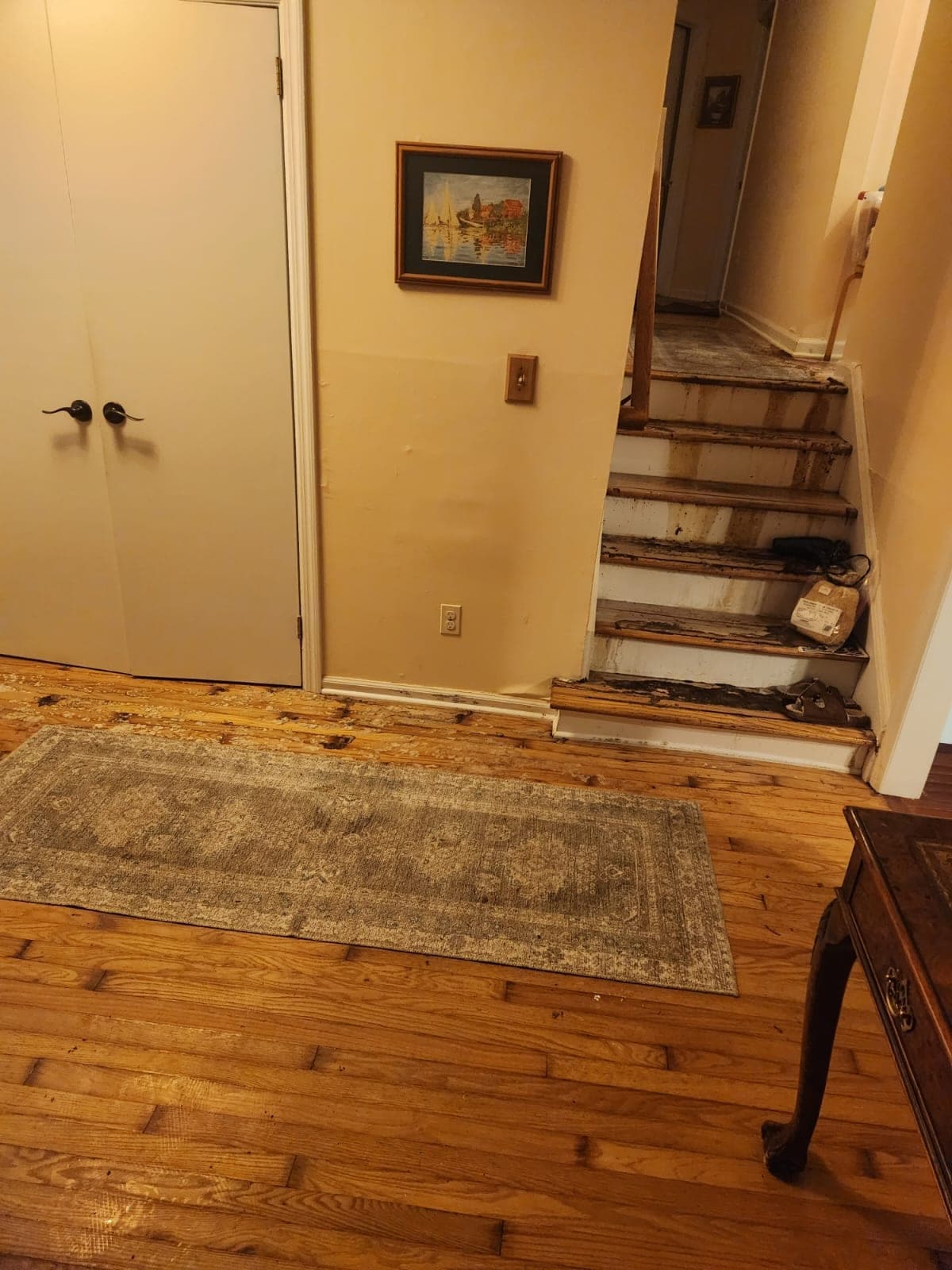
Standing sewage is extracted first. Carpet, pad, drywall, and cardboard that absorbed it are bagged for disposal, because Category 3 contamination cannot be washed out of porous material.
- 04
Clean and disinfect

Hard surfaces are cleaned and then disinfected with EPA-registered products. This is the step that removes the bacteria and the odor, and it happens before drying equipment goes in.
- 05
Dry and verify

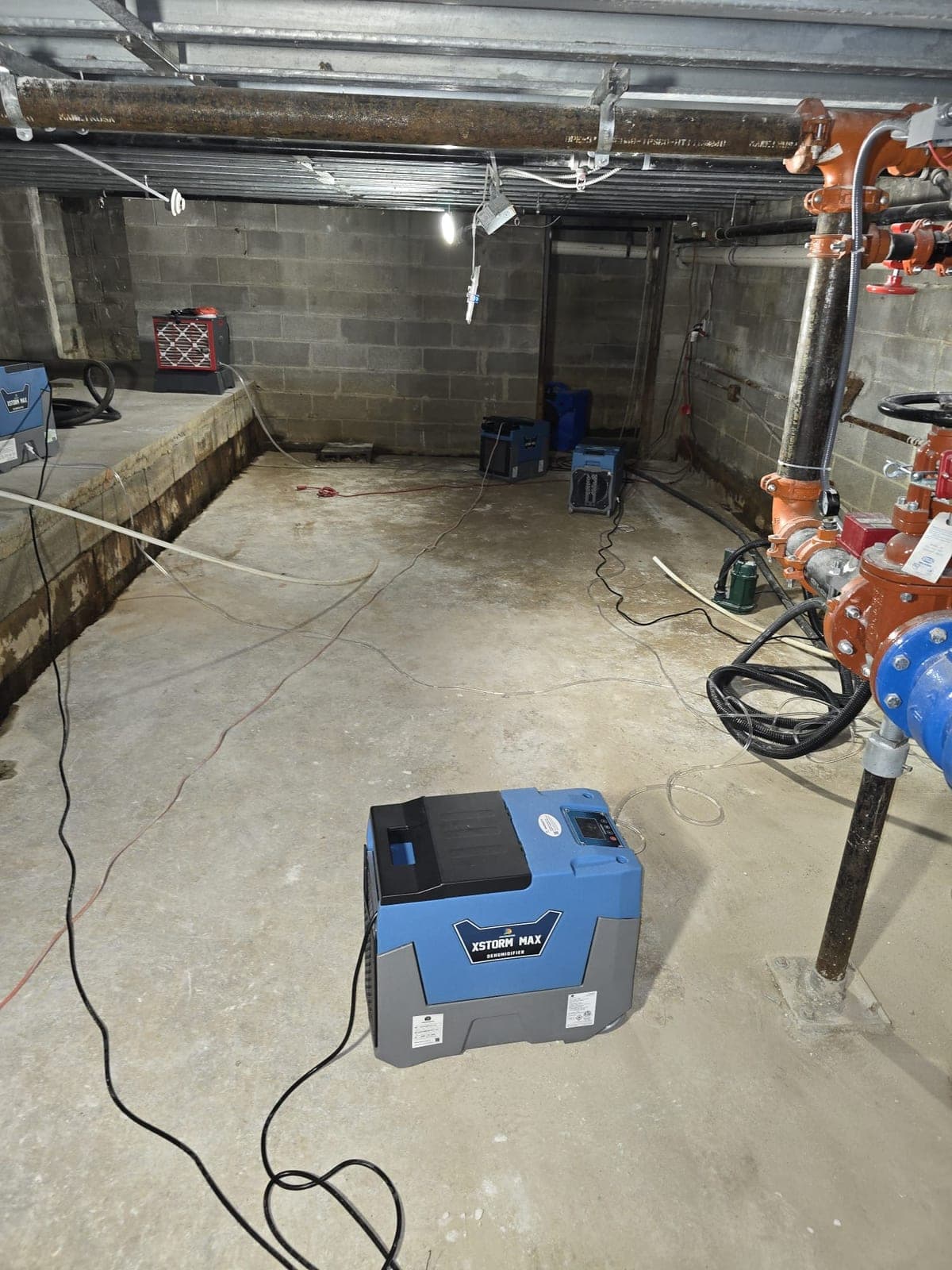
Dehumidifiers and air movers dry the structure, and moisture readings confirm it before the containment comes down. You get photos and a written list of everything that was removed.
Insurance
We work with your insurance, and we bill them directly
- 01
Call us
We answer, ask what happened, and get a crew moving. Same-day emergency response on active water.
- 02
We document everything
We take moisture readings and photos and write up a scope of work before drying starts, so your adjuster has the file from day one.
- 03
We bill your insurer directly
We work directly with your insurance company on covered water and mold claims, so you're not fronting the full cost and chasing reimbursement.
Your deductible is still yours to cover, and we'll tell you that number before any work starts rather than after. You also don't need a claim to hire us. Plenty of our jobs are paid directly by the homeowner, and after the free inspection we'll say which way makes more sense for the damage you have.
Common problems
What we get called about most.
Floor drain backed up in the basement
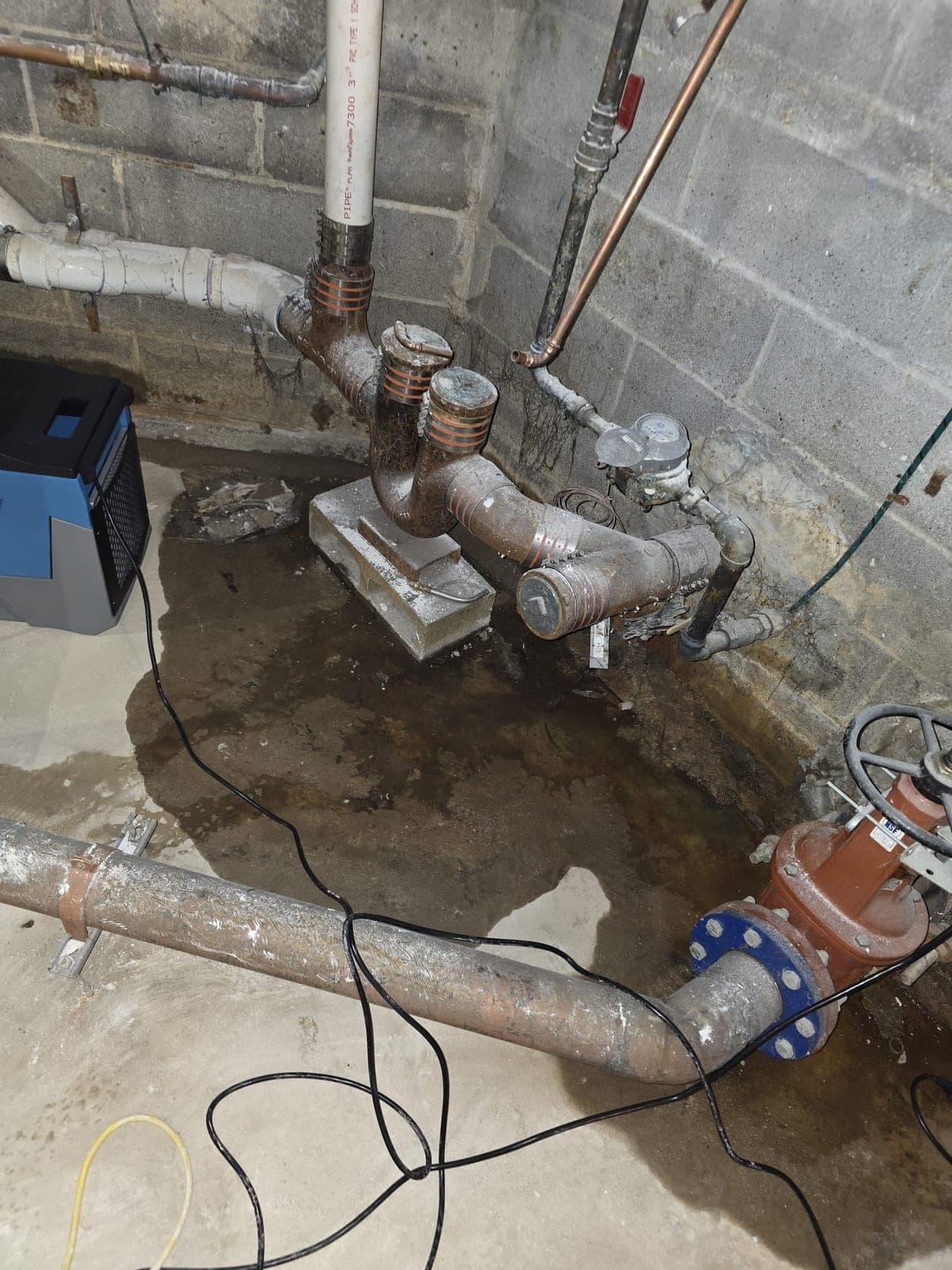
Heavy rain can overload sewer lines and push wastewater up through basement floor drains. The water is contaminated even when it looks like rainwater. We remove it and disinfect the slab, then dry the space to a metered standard.
Toilet overflow that left the bathroom
An overflow from the drain side of a toilet is contaminated water. When it crosses into a hallway or drips through to the ceiling below, those materials need disinfection or removal, not drying alone.
Main sewer line blocked
Tree roots or a collapsed line can send wastewater back into the lowest fixtures in the house. The line repair is a plumber's job; the cleanup and disinfection are ours, and we can work alongside the plumber.
Sewage reached carpet or a finished room
Carpet and pad that absorbed sewage cannot be sanitized and are removed. The framing and slab underneath are disinfected and then dried to a metered standard before the room is rebuilt.
Who's showing up
Local and independent, based in Totowa, NJ.
The person on the phone is the one planning your job, and the scope and moisture readings come from the crew that does the work.
- IICRC Certified
- Licensed
- Bonded
- Insured
Related services
More of our water damage services.
Part of our Water Damage Restoration service — see the full picture →
Emergency Water Removal →
Standing water pumped out on the first visit, dispatched the same day you call.
Basement Flood Cleanup →
Pump-out and structural drying for flooded basements, plus help finding how the water got in.
Burst Pipe Cleanup →
Shut the main valve, then call us for the extraction and drying.
Storm Damage Cleanup →
Tarping and board-up first, then extraction and structural drying.
Structural Drying →
Drying measured with meters and logged daily until the structure reads dry.
FAQ
Questions we get most.
Does homeowners insurance cover water damage?
Usually, when the cause was sudden and accidental: a burst pipe, a failed water heater, an appliance hose that let go. Policies generally exclude damage that happened gradually, like a slow leak that ran for months, and outside flooding needs a separate flood policy. When we inspect, we document the cause of loss carefully, because that is the first thing the adjuster reviews.
What should I do in the first few hours after water damage?
Stop the water at the main shut-off or the fixture valve if you can reach it safely. If water is near outlets or appliances, cut power to that area at the breaker — never stand in water to do it. Move what you can to a dry room. Then call (551) 414-6202. The sooner extraction starts, the more of the structure and contents we can save.
How fast can you get here?
We dispatch the same day you call, six days a week, from our base in Totowa. Most of our service area is within about 45 minutes. Tell us what you see when you call — standing water, an active leak, a ceiling coming down — and we will tell you what to do until the crew arrives.
Is it safe to stay in the house during water damage?
Often yes, but stay out of rooms with sagging ceilings, and never walk through water that could be touching electrical outlets or equipment. If the water came from a sewer backup, keep people and pets away from the area entirely — that water carries bacteria. When we arrive we will tell you plainly which rooms are fine and which to avoid.
What is the difference between clean water and sewage water?
The IICRC S500 standard grades water by contamination. Clean supply-line water is Category 1. Water that passed through building materials or appliances is Category 2. Sewage backups and outside floodwater are Category 3 — contaminated, and the porous materials they soak usually have to be removed and the area disinfected, not just dried. The category decides the protocol, which is why we identify the source first.
Our work




Emergency? Call first
If water is on the floor, skip the form.
Call (551) 414-6202. We'll ask what happened, tell you what to do right now, and get a crew moving. The line is answered six days a week. Use the form for anything that can wait.
Same-Day Emergency Response. Closed Saturdays for Shabbat.