
Same-Day Emergency Response
Storm Damage Cleanup
Tarping and board-up first, then extraction and structural drying.
Serving Passaic, Bergen, Essex, Morris, Sussex & Hudson counties in Northern New Jersey.
At a glance
When wind damage lets rain into the attic or through a ceiling, the first job is covering the opening. Call (551) 414-6202. We dispatch the same day and tarp and board up on arrival, then extract the water and dry the structure underneath.
Content reviewed August 2026.
Call between 8am and 6pm, Sunday through Friday, and a person picks up. Closed Saturdays for Shabbat.
Same-day emergency response
Response promise
6 counties
Northern NJ service area
Totowa, NJ
Locally owned & operated
IICRC Certified
Certification
The work
What's included
Storm damage cleanup across Northern NJ: emergency roof tarping, board-up, water extraction, and structural drying. Same-day response from Totowa, six days a week.
- Same-day emergency response, six days a week
- Roof tarping and board-up to stop more water from entering
- Water extraction and structural drying once the opening is covered
- Wet attic insulation and ceiling drywall removed; mold can start in wet material within 24 to 48 hours
- Moisture meters check the attic framing and the wall cavities below the leak
- Damage documented with photos and readings from the first visit
- Covered storm claims billed directly to your carrier, and no claim is required to hire us
Process
What happens after you call.
- 01
Call and describe the damage
Tell us what happened and whether water is still coming in. If part of the structure looks unsafe, stay out of that room and say so when you call; we plan the visit around it.
- 02
Cover the openings
Tarps go over the roof damage, and board-up covers broken windows and doors. This stops more rain from entering before the cleanup starts.
- 03
Extract and remove
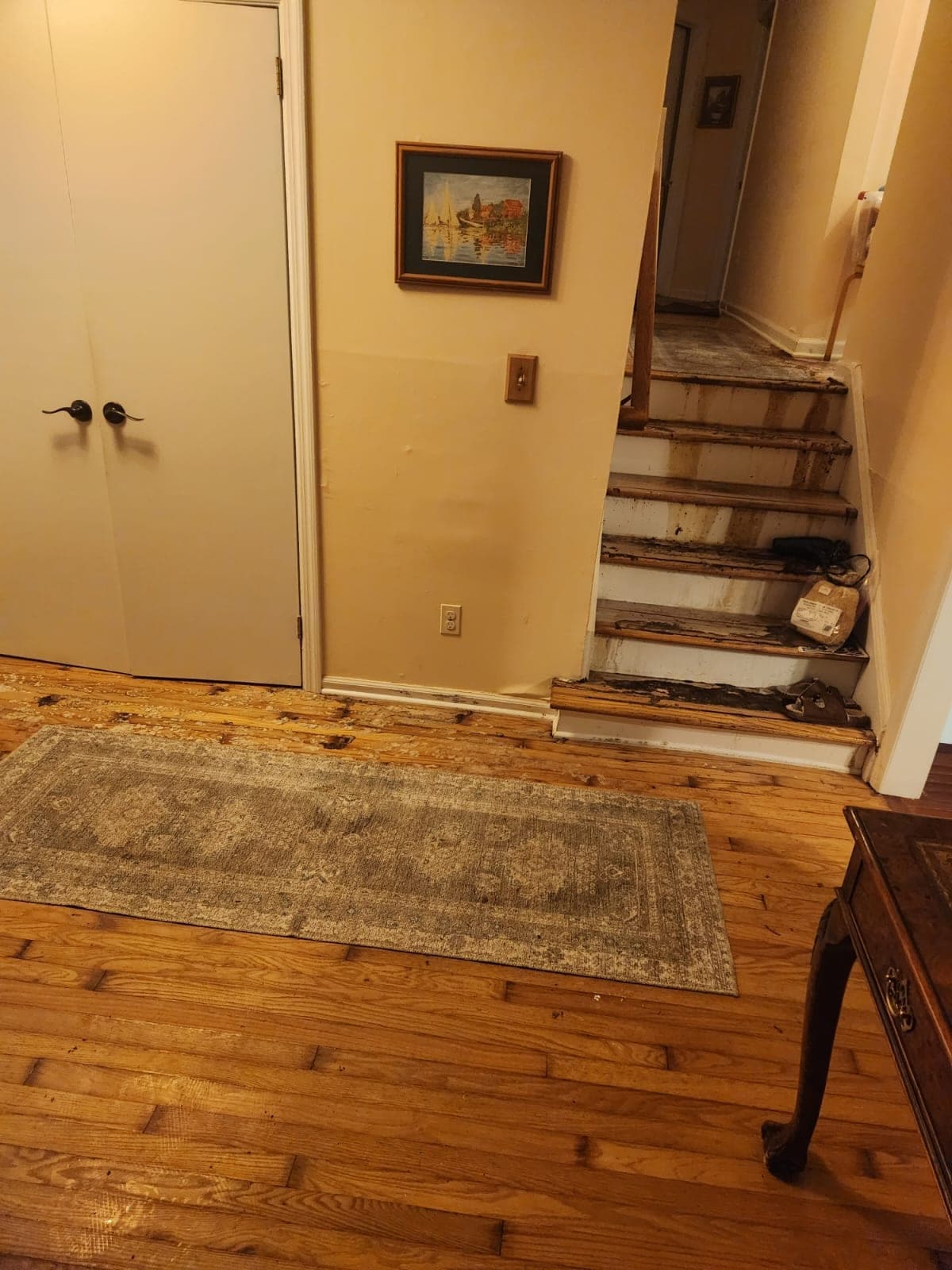
Standing water is extracted, and soaked insulation and ceiling drywall come out, along with flooring that cannot be saved. Everything removed is photographed and listed.
- 04
Dry the structure
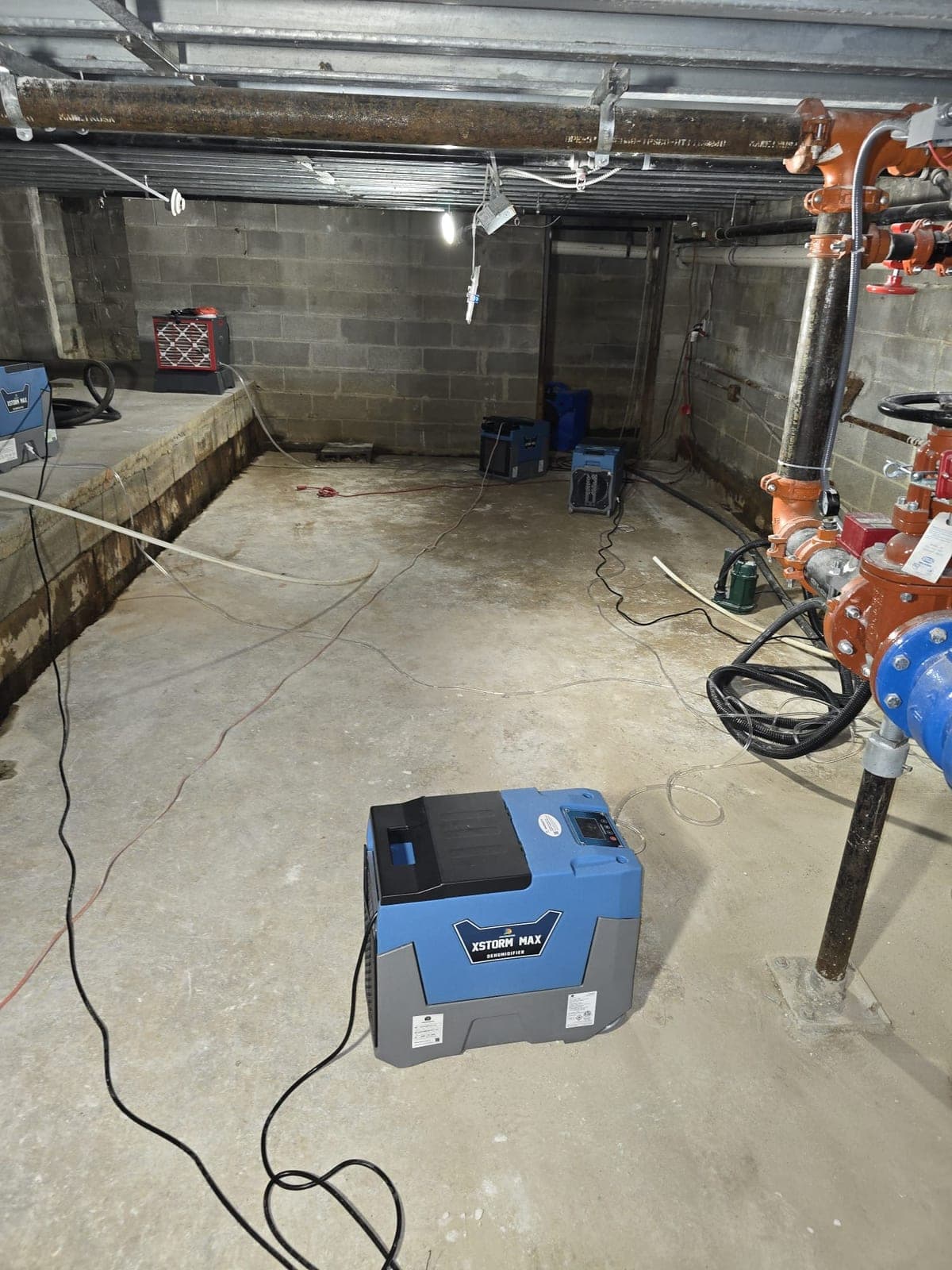
Air movers and dehumidifiers dry the framing and cavities below the leak. Attics and ceiling assemblies hold water out of sight, so equipment placement follows the meter readings rather than what looks wet.
- 05
Verify and document
Final moisture readings confirm the dry standard. Photos from before the tarping through the final readings give your insurance file a complete record of the loss.
Insurance
We work with your insurance, and we bill them directly
- 01
Call us
We answer, ask what happened, and get a crew moving. Same-day emergency response on active water.
- 02
We document everything
We take moisture readings and photos and write up a scope of work before drying starts, so your adjuster has the file from day one.
- 03
We bill your insurer directly
We work directly with your insurance company on covered water and mold claims, so you're not fronting the full cost and chasing reimbursement.
Your deductible is still yours to cover, and we'll tell you that number before any work starts rather than after. You also don't need a claim to hire us. Plenty of our jobs are paid directly by the homeowner, and after the free inspection we'll say which way makes more sense for the damage you have.
Common problems
What we get called about most.
Shingles gone, ceiling stained
Wind-lifted shingles let rain into the attic, where insulation soaks it up and holds it against the ceiling drywall. We tarp the roof and remove the wet insulation, then dry the attic framing.
Tree limb through the roof or siding
The opening gets covered with tarp or boards on the first visit. We handle the water cleanup and drying inside; the structural repair is scoped separately once the property is protected.
Basement took on storm water
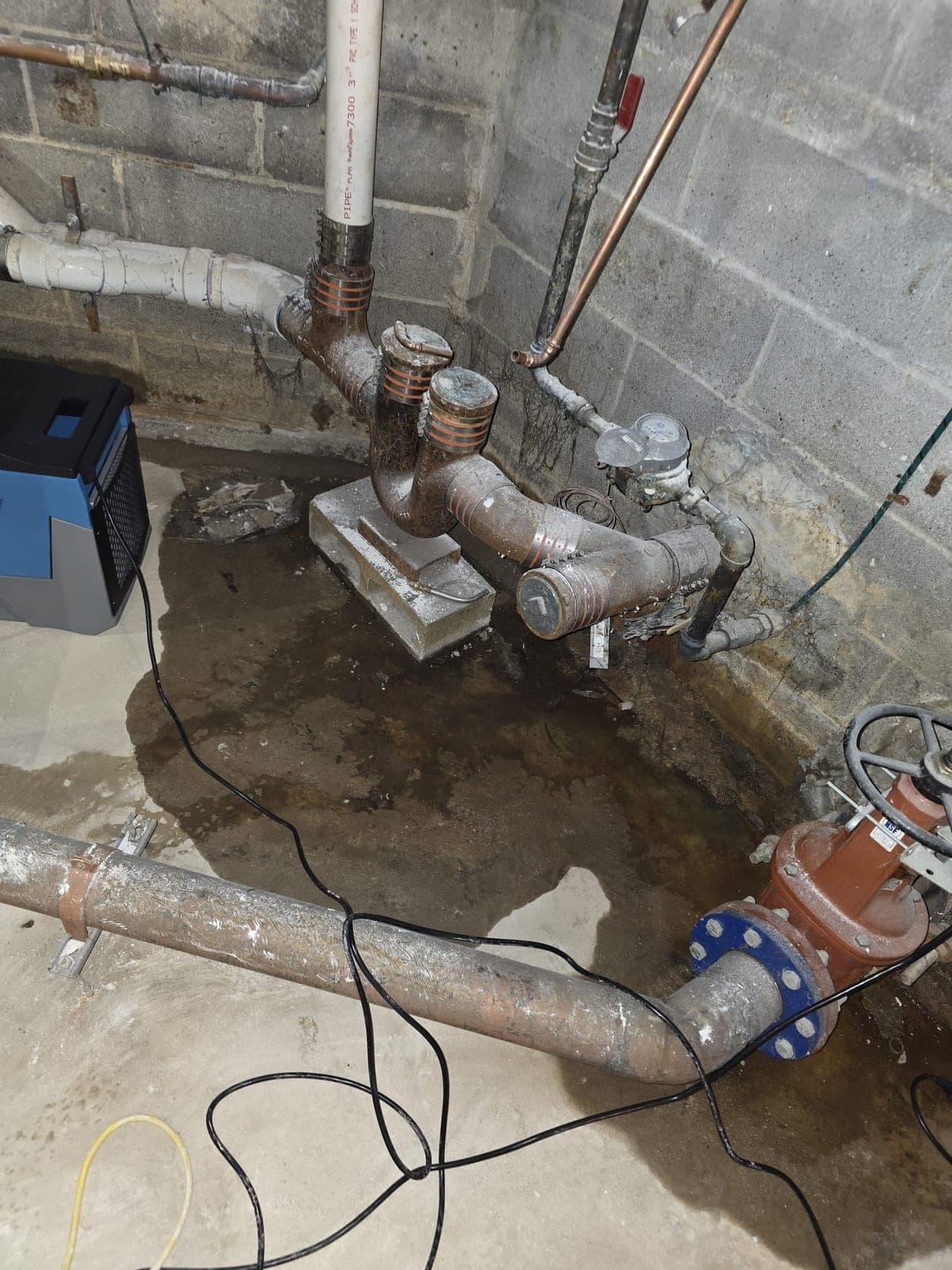
Heavy storms overwhelm sump pumps and drive water through foundations. We pump the basement out and dry the slab and framing, and affected surfaces are treated with EPA-registered antimicrobials.
Ceiling bulging with trapped water
A sagging ceiling is holding water and can fall without warning, so keep out of that room. We release the water in a controlled way, then remove the damaged drywall and dry the framing above it.
Who's showing up
Local and independent, based in Totowa, NJ.
The person on the phone is the one planning your job, and the scope and moisture readings come from the crew that does the work.
- IICRC Certified
- Licensed
- Bonded
- Insured
Related services
More of our water damage services.
Part of our Water Damage Restoration service — see the full picture →
Emergency Water Removal →
Standing water pumped out on the first visit, dispatched the same day you call.
Basement Flood Cleanup →
Pump-out and structural drying for flooded basements, plus help finding how the water got in.
Burst Pipe Cleanup →
Shut the main valve, then call us for the extraction and drying.
Sewage Backup Cleanup →
Category 3 cleanup with containment and EPA-registered disinfectants.
Structural Drying →
Drying measured with meters and logged daily until the structure reads dry.
FAQ
Questions we get most.
Does homeowners insurance cover water damage?
Usually, when the cause was sudden and accidental: a burst pipe, a failed water heater, an appliance hose that let go. Policies generally exclude damage that happened gradually, like a slow leak that ran for months, and outside flooding needs a separate flood policy. When we inspect, we document the cause of loss carefully, because that is the first thing the adjuster reviews.
What documentation does an insurance claim need?
Photos of the damage before work starts, moisture readings from every affected material, drying logs while equipment runs, and an itemized scope of what was removed and why. We produce all of it as we work, and you get a copy whether or not you file. If a failed part caused the loss — a supply line, a fitting — keep it, because adjusters often want to see it.
Should I wait for the adjuster before cleanup starts?
No. Your policy requires you to take reasonable steps to prevent further damage, and standing water does more harm every hour it sits. Extraction and drying should start right away. We photograph and document the property before and during the work, so the adjuster can see exactly what condition it was in when we arrived.
What should I do in the first few hours after water damage?
Stop the water at the main shut-off or the fixture valve if you can reach it safely. If water is near outlets or appliances, cut power to that area at the breaker — never stand in water to do it. Move what you can to a dry room. Then call (551) 414-6202. The sooner extraction starts, the more of the structure and contents we can save.
How fast can you get here?
We dispatch the same day you call, six days a week, from our base in Totowa. Most of our service area is within about 45 minutes. Tell us what you see when you call — standing water, an active leak, a ceiling coming down — and we will tell you what to do until the crew arrives.
The floor looks dry now. Is the damage done?
Surfaces dry first; the layers underneath do not. Water wicks into subfloors, wall cavities, and insulation, where it can sit for weeks. Mold growth can start in 24 to 48 hours in material that stays wet. We check with moisture meters and a thermal camera, and if the readings say the structure is dry, we tell you that and leave it alone.
Our work




Emergency? Call first
If water is on the floor, skip the form.
Call (551) 414-6202. We'll ask what happened, tell you what to do right now, and get a crew moving. The line is answered six days a week. Use the form for anything that can wait.
Same-Day Emergency Response. Closed Saturdays for Shabbat.